Paver Pressure Washing Done Right Before Sealing
Most people think a pressure wash is just about looks. And sure, clean pavers look great - but that's not the whole story. When you're planning to seal, the wash is actually the most important step. Sealer bonds to the surface, which means any dirt, algae, or buildup left behind gets locked in permanently. That's not what you want.
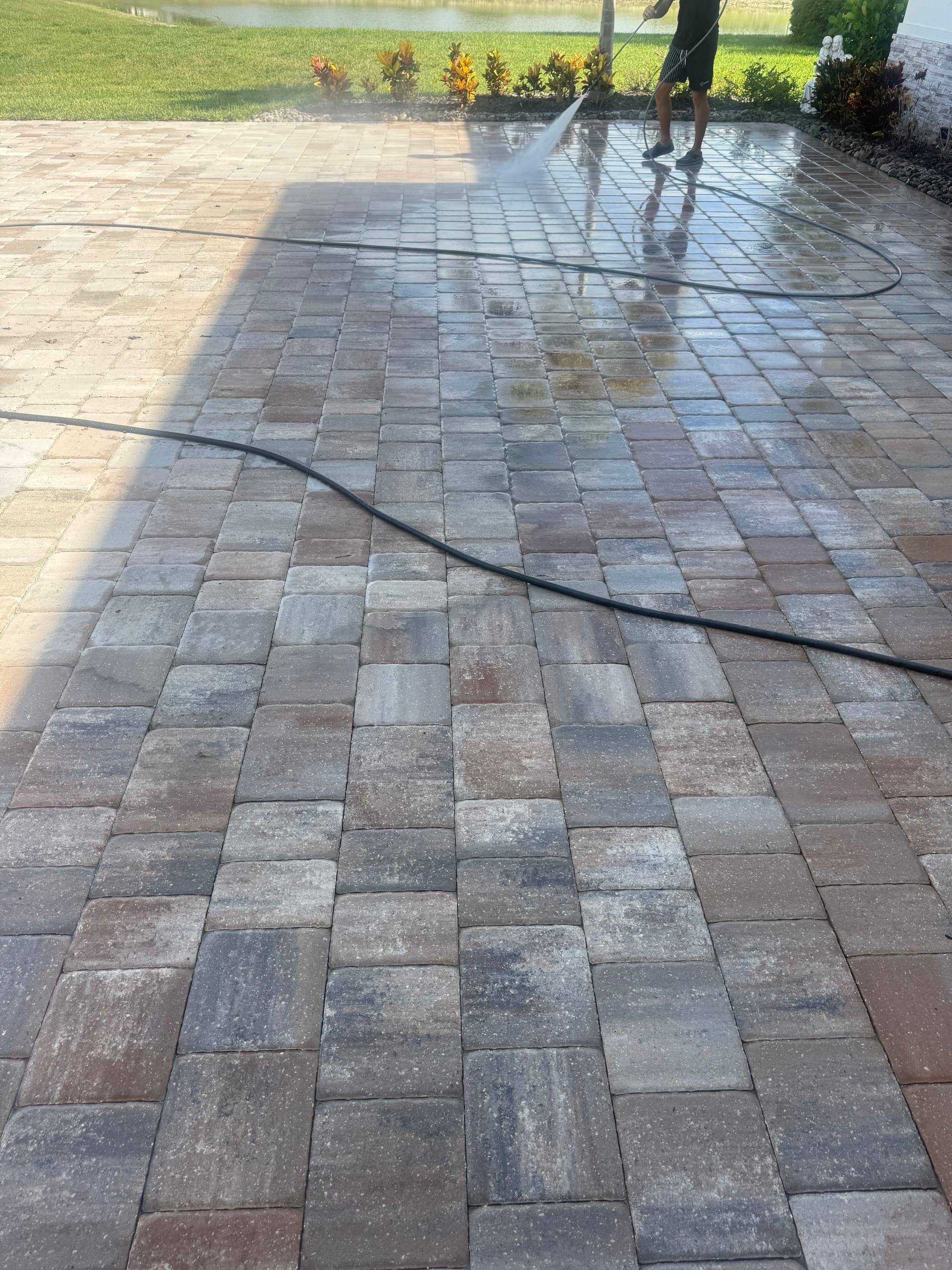
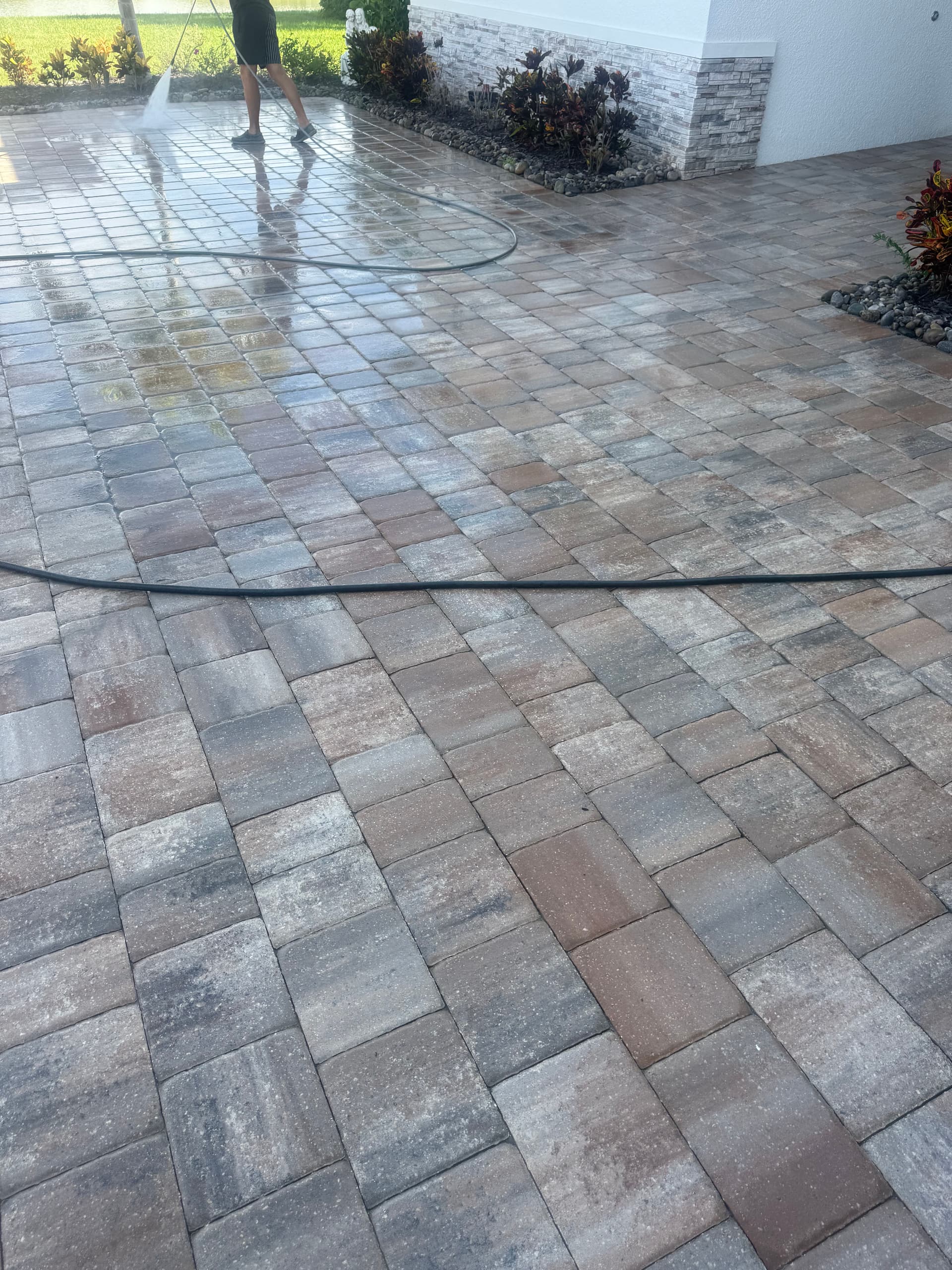
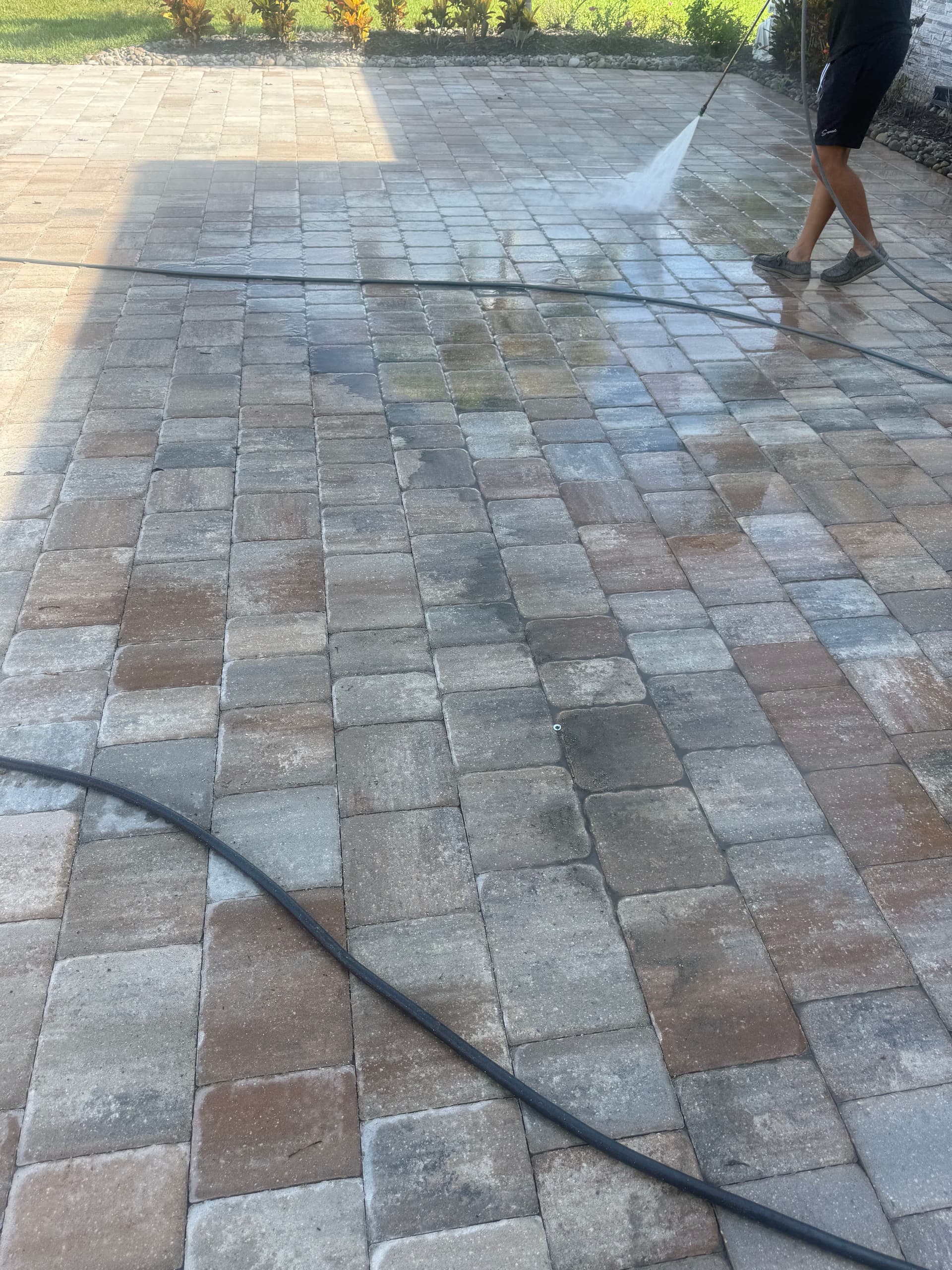
Here's what we were working with - a large paver patio with visible grime, algae growth, and discoloration built up across the surface. The kind of stuff that doesn't wipe off. It takes real pressure, the right technique, and patience to work through a patio this size without missing spots or damaging the joints between pavers.
We work section by section, keeping the wand at a consistent angle and distance to pull the debris out of the joints without blasting the sand loose. It's a rhythm. Rush it, and you end up with uneven results or paver joints that need to be re-sanded before you can even think about sealing.
Once the surface is fully clean and dried down, it's ready to accept sealer properly - meaning better adhesion, longer protection, and a finish that actually holds up through rain, heat, and foot traffic. Skipping or rushing the wash undermines everything that comes after it. We don't cut corners on this step because it sets the foundation for how long the seal job lasts.
If your pavers are looking worn out or you're thinking about getting them sealed, the wash is where it all starts. Getting it done right the first time saves you from having to redo it sooner than you should.